Comata Brand Explainer Video
About
Comata is a fictional product and a personal brand film about what happens when data sits in silos. The data never interacts, so the insights that connect it stay hidden in plain sight. The film shows Comata unlocking those silos, bringing the data together, and surfacing what matters.
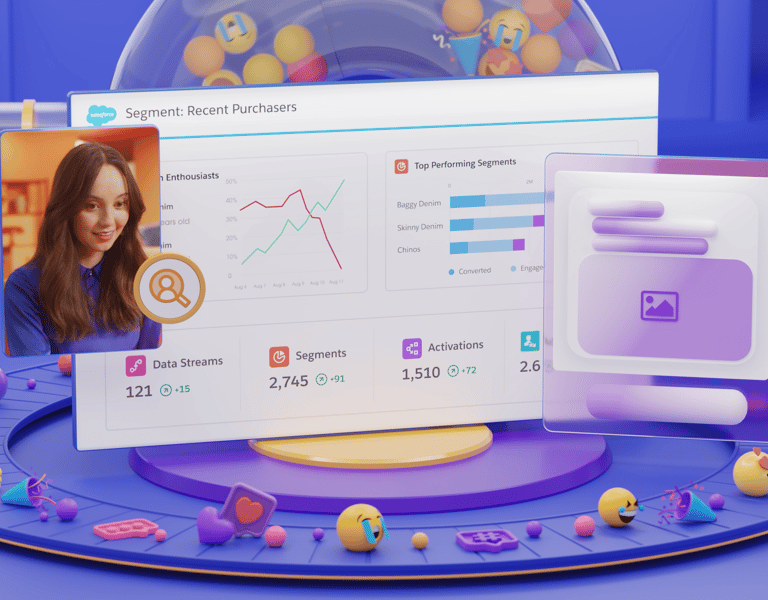
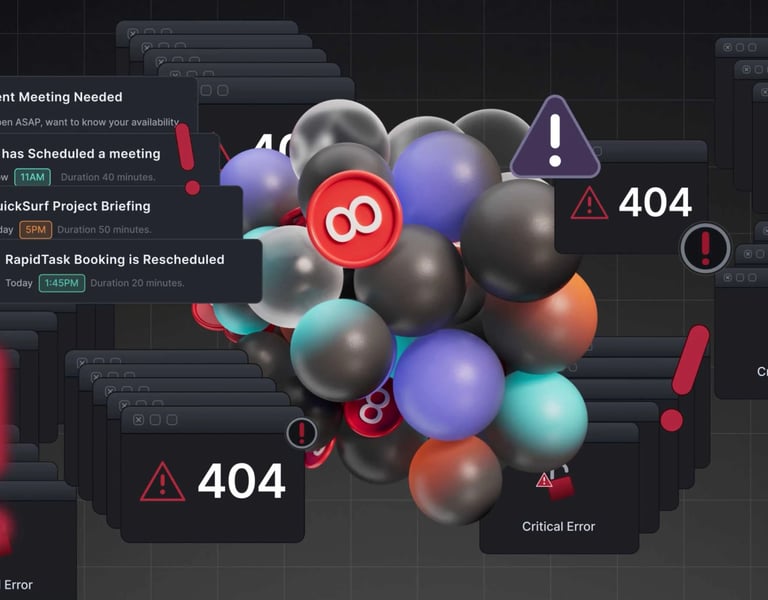
It is roughly 95% 3D animation with a layer of 2D motion design. Data becomes balls that roll, bounce, and spill through a dense, Rube Goldberg-style machine of tubes, turbines, robotic arms, and sorting stations, while UI elements track the growing number of data points processed.
The goal was to build extremely heavy scenes with a lot of moving parts and still tell a clear story: from locked silos, to a massive sorting machine, to a single insight, to a customer profile, and finally the join button, where the client walks into a video call with the right insights in hand. The biggest challenge was blending simulation, rigid body dynamics, and keyframed animation so each scene feels physical but stays controlled.
Mohamed Basil - Art Direction, 3D Modeling, Animation & Sound Design / Cinema 4D, After Effects
Complete Process Walkthrough

Pre-Production
Script
The script was developed to break down an abstract problem, data locked in silos, into a structured flow, from the locked silos to the sorting machine, the insight, the customer profile, and the final join button. It made sure every 3D machine, simulation, and UI element had a clear role in supporting the story.
Initial Sketches
Rough sketches were used to map out the key moments of the story and plan how the machine flows, from the locked silos to the final join button.
Special focus was placed on how the Rube Goldberg system could guide the balls clearly from one station to the next, and on how UI elements, counters, and labels sit inside the 3D world, ensuring readability, clear cause and effect, and smooth transitions between scenes.


Production
The production phase combined heavy 3D simulation work in Cinema 4D with 2D compositing and UI work in After Effects.
3D was used to build the machine, its physics, and its motion, while 2D elements were layered in to track the data points, label the stations, and reveal the final customer profile.
Simulations, rigid body dynamics, and keyframed animation were blended scene by scene, so the balls move with real physical weight while the robotic arms, valves, and turbines hit their timing exactly. Sound design was done in-house to give the machinery weight and rhythm.
Outcome
The result is a dense, story-driven 3D film that demonstrates:
Complex, multi-part simulations that stay readable
A controlled mix of simulation, rigid body, and keyframed animation
A complete pipeline handled by one person.
Impact
Turns an abstract problem like data silos into a clear visual story
Uses a Rube Goldberg-style system to make data flow easy to follow
Balances rich, tactile 3D with functional communication


Tutorials


LET'S GET
STARTED
You can contact me by submitting the form or email me directly.

TIME ZONE
India GMT (+5:30)
Flexible +/- 3 Hours